
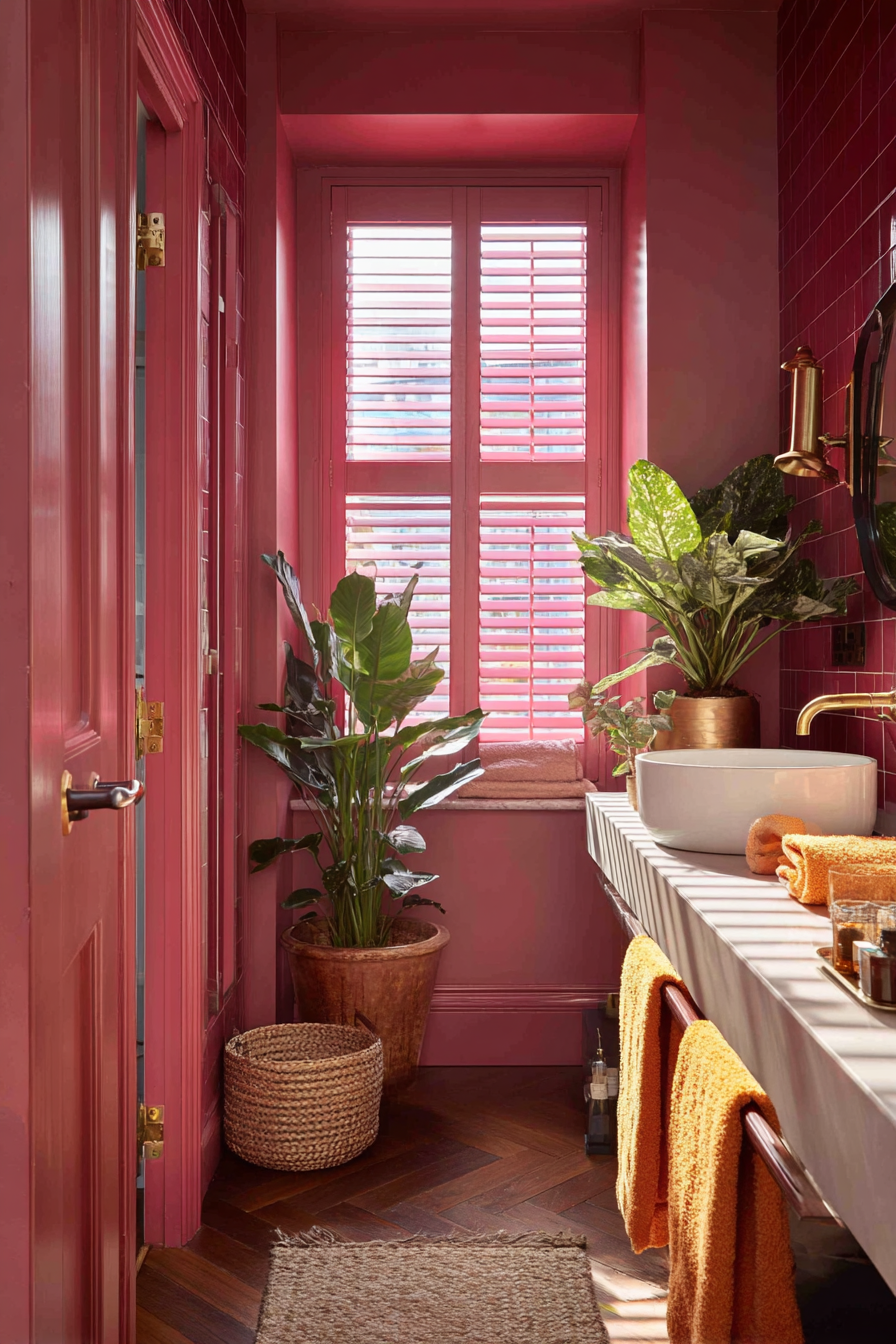
If you are renovating a Victorian terrace in Hackney or a period conversion anywhere across East London, you will have noticed something straightforward: standard shutters do not fit right. They sit proud of the frame. They catch on old plasterwork. They look like an addition rather than part of the house.
Anyone who has worked on a period property will know the feeling. You want shutters. You find a supplier. You buy shutters. Then you try to fit them and realise straightaway that the walls are not what the manufacturer assumed they would be.
We have fitted shutters in hundreds of homes across East London, Walthamstow, Hackney, Stoke Newington, Bow, Islington and beyond. And we have seen this happen so many times that we now think about period properties differently. Standard shutters assume modern walls. Period homes built in the 1890s do not have modern walls.
That is the whole reason custom shutters exist.
Why Period Homes Are Different
Period properties across East London were built with materials and proportions that do not align with modern manufacturing standards. A Victorian townhouse in Leyton has window depths, plaster profiles and room dimensions that a 1970s semi does not have. A Georgian conversion in Stoke Newington has different structural considerations again.
When you install off-the-shelf shutters in a period home, they almost always create the same problems: gaps between the shutter frame and the wall, uneven hanging where the wall surface is irregular, visual misalignment with original architectural details, and hardware that does not sit flush with skirting boards or dado rails.
Each of these is solvable. None should exist in the first place.
We have learned this the hard way. We have fitted enough shutters to know that the gap between what you buy off the shelf and what your actual walls need is where most of the frustration happens.
How We Approach It Differently
When we measure a window in an 1890s terrace, we are accounting for several things at once. The depth of the window reveal. The thickness and texture of the original plasterwork. The position of skirting boards, radiators and other fixed elements. Whether the wall is load-bearing. How the room actually feels when you stand in it.
We take these measurements on site. We talk to you about what you want the shutters to do. We show you how they will actually sit in your space before we build them.
Then we build them to those measurements. Not to an assumption. Not to an average. To your walls, your windows, your room.
When they arrive and go on, they hang true. They operate smoothly. They sit as if they were always part of the house. Because they are built for your house, not for a template.
And if you’re unsure which shutter style is right for your home this will help you decide
Materials Matter More in Period Homes
Most period homes in East London are built from London stock brick with lime mortar. This matters because wooden shutters are the period-appropriate choice. They complement original joinery, sash windows and architraves. They age naturally, developing a patina that suits older buildings.
Composite shutters exist for low-maintenance households. We understand the appeal. But they introduce visual inconsistency in homes where everything else: floors, joinery, windows, is timber-based. The choice is a design one, not a maintenance one. Choosing wood in a period home is not about what is easier to look after. It is about what makes sense in that space.
When you commission custom shutters, you get to make that choice consciously rather than defaulting to whatever your local builder merchant stocks.
What Matters Is Local Knowledge
We have been fitting shutters in East London for years. We understand how these buildings are structured. We know which walls are load-bearing. We know where pipes and wiring run. We know how to work around them without creating problems later.
This is not information you find in a manual. It comes from experience. From fitting homes in the same area. From understanding the specific constraints of period construction in London.
When you commission custom shutters, you are commissioning that expertise. The shutters themselves are the outcome.
Next Steps
If you are considering shutters for a period home in East London, a site visit is the first step. We will measure your windows, discuss what you want the shutters to do, and show you how they will work in your actual space. There is no obligation, and we are always happy to talk through what you are thinking about.
You can reach us through clicking the button below, or get in touch directly with details of your project and location by emailing us sales@theeastlondonshuttercompany.co.uk.