
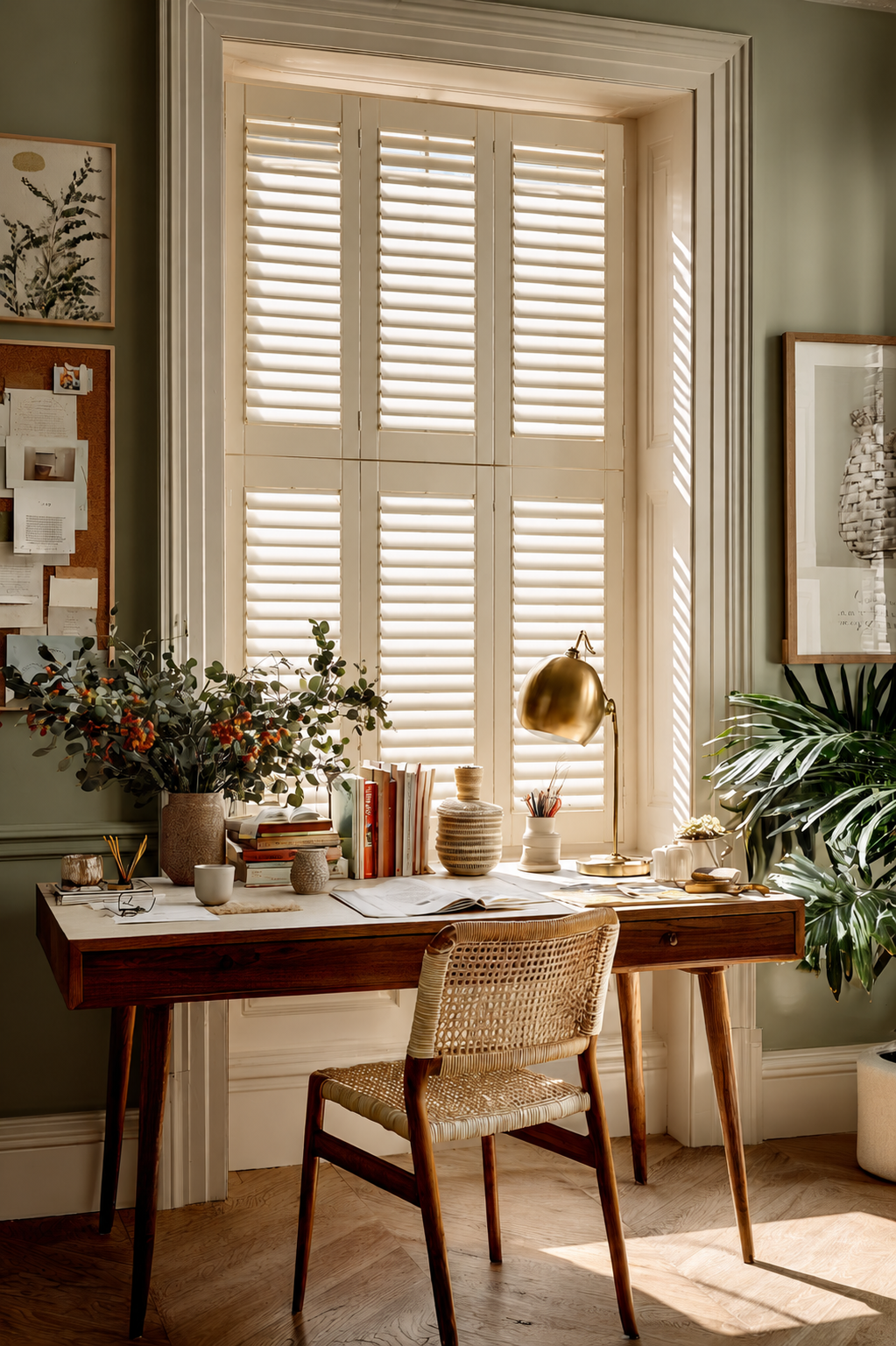
There is a particular quality to summer light in East London that makes you see your home differently. It comes in at a different angle, it stays longer, and it makes the rooms you have lived with all year suddenly look like they need a rethink. If you have been meaning to sort your windows for a while, this is often the moment the thought becomes an actual decision.
We have been fitting plantation shutters across East London and Hackney for several years now, and the summer months always bring a particular kind of conversation. Homeowners who are not planning a full renovation, but who want the rooms they spend the most time in to feel fresher, lighter, and more considered. A window makeover is exactly what it sounds like: a change focused on the window rather than the whole room, but one that has a disproportionate effect on how the space feels overall.
Why the Window Makes Such a Difference
The window is the part of a room that most people interact with dozens of times a day without really thinking about it. You open a curtain in the morning, pull a blind down in the afternoon, and put up with whatever compromise you settled on when you first moved in. But the way your window is dressed affects the whole room: the quality of light, the sense of proportion, even whether the space feels calm or slightly unresolved.
Plantation shutters work particularly well as a summer update because they give you genuine control over that light without sacrificing it entirely. The louvre blades can be tilted to bring soft, diffused light into the room while keeping direct glare off a sofa or screen. On a warm afternoon, they allow air to move through even when they are partially closed, which matters in the kind of Victorian and Edwardian terraces that make up much of housing stock across Bow, Stoke Newington, and Walthamstow. These houses were not built with modern glazing or insulation in mind, and anything that helps manage light and heat without blocking the window entirely earns its place.
What a Summer Window Makeover Actually Involves
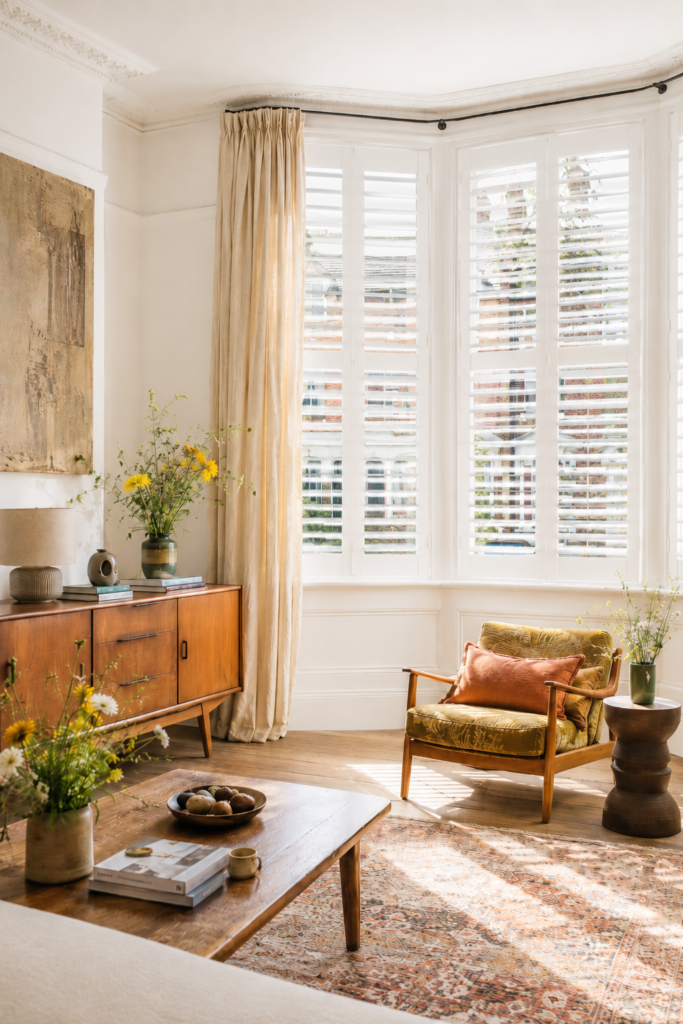
The word makeover can sound more dramatic than it needs to be. What most homeowners mean when they say they want to refresh their windows is: make it feel intentional. At the moment, the window treatment looks temporary or mismatched. After, it should feel like it belongs.
A plantation shutter window makeover usually starts with looking at what the room already does well and working from there. Crisp white shutters pair very naturally with the kinds of lighter seasonal changes people tend to make in summer anyway – swapping heavy throws for linen, bringing in natural textures like rattan or jute, choosing softer neutrals for cushions and accessories. The shutters do not need to compete with any of that. They provide a clean, consistent frame for the window and let everything else in the room breathe.
The same principle applies whether you are updating a bedroom, a living room, or a home office. Each space has a slightly different need. In a bedroom, the priority is usually getting enough darkness to sleep comfortably in June when it is still light at ten in the evening, while keeping the room feeling calm and well-lit during the day. Full height shutters with a mid-rail let you manage both, tilting the top louvres for light and privacy without the whole window feeling blocked. In a living room, the challenge is often that long afternoon sun that makes the room glaringly bright at exactly the time you want to sit and relax. In a home office, it is almost always about glare on a screen.
The Practical Side
Something we say to homeowners who are weighing up whether shutters make sense is that they are not a seasonal solution. The summer refresh impulse is real and it is a good reason to start the conversation, but what you end up with is a window treatment that serves the room in every season. Come October, when the light has changed again and the curtains or blinds you were going to replace are still there, the shutters will still be doing exactly what you put them in for.
In period homes across East London – the kind of homes where the windows are a genuine architectural feature rather than an afterthought – shutters also do something harder to quantify. They bring the window back into the room rather than dressing over it. The proportions become visible again. The frame reads properly. It is the kind of thing you notice in photographs of a room and it is surprisingly difficult to achieve with fabric alone.
If you have been thinking about a window makeover this summer and you want to talk through what is possible, we are happy to come and take a look. No pressure, no hard sell – just two people who have done this in a lot of homes and genuinely enjoy talking about it.
Frequently Asked Questions
Yes, and particularly so in older homes where managing heat and light is a genuine challenge. The louvre blades tilt independently of the panels, which means you can have a window fully open for ventilation while directing sunlight away from where you are sitting. In rooms that face south or west and get the full force of the afternoon sun, this makes a noticeable difference to how comfortable the space is.
Not if you do not want them to. When the louvres are fully open and the panels are folded back, a plantation shutter lets in as much light as an uncovered window. The control is in the tilt – you can go from full light to full blackout and anywhere in between. In practice, most people find they use a partially tilted position for most of the day, which gives a soft, even light that is actually more pleasant than direct sun through a clear window. And if you’re in a bedroom you might want to consider solid shutters to have a dark, cool room at night.
Crisp white is the most popular choice and for good reason – it reflects light, feels clean, and works with virtually any interior palette. Off-white and warm neutral tones are a good option if your home has warmer finishes or period features that a bright white might sit against too starkly. We always recommend looking at a sample in the actual room rather than choosing from a swatch, because the colour reads differently depending on the light the room gets.
Absolutely. A lot of homeowners start with one room – usually a bedroom or a living room that has been bothering them the most – and then extend to others over time. There is no requirement to do the whole house at once. If budget or timing means you want to start with a single window makeover, that is a perfectly sensible way to approach it.
For most rooms, fitting takes a few hours. A single window can be done in under an hour; a bay window or a room with several windows might take most of a day. We measure, manufacture, and fit everything ourselves, so the whole process from first visit to completed installation is typically four to six weeks.