
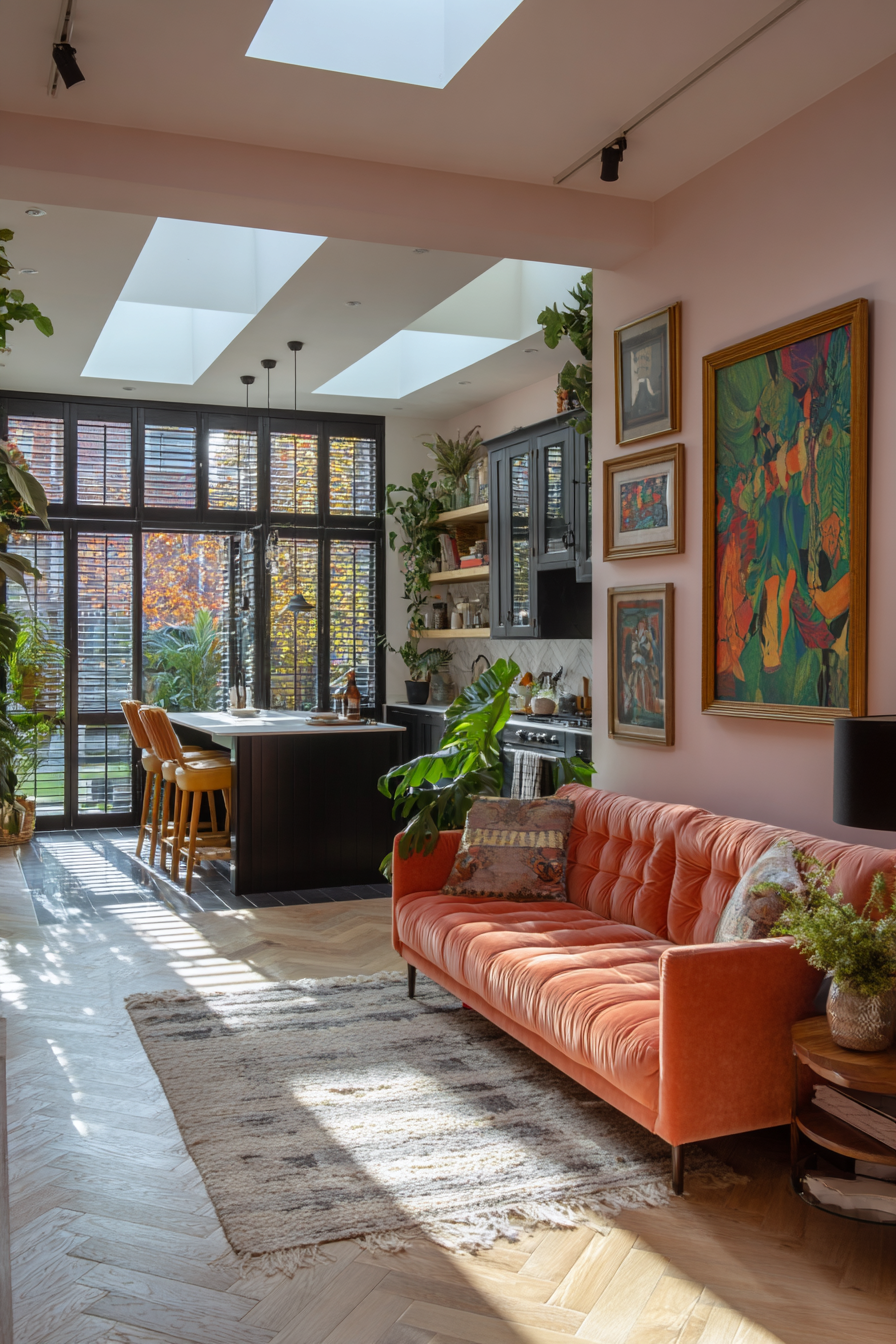
There is a specific kind of frustration that happens in an East London Victorian terrace around this time of year. The sun swings round, the front room heats up fast, and you are suddenly faced with a choice that should not exist in a home you love: draw the curtains and sit in the dark, or leave them open and sit in a greenhouse. Most people end up doing neither properly. They half-draw the curtains, slightly adjust the blind, and then give up on the room until early evening.
It is not a comfortable way to spend summer in a house you are otherwise proud of.
We fit shutters across Hackney, Walthamstow, Islington, Leyton and all the streets around, in Victorian semis, Edwardian terraces and Georgian townhouses, and June is consistently when we hear from more people than any other time of year. Not because they have just discovered shutters, but because a proper week of heat finally made a problem they had been tolerating feel worth solving.
How to treat your period windows in the summer
A Victorian sash window was designed to let light in. That was the point. When these houses were built, natural light was precious, so the windows were made generous. In winter, you are grateful for every bit of it. Come June, that generosity becomes the problem.
A south or west-facing sash window in full summer sun turns a room into a solar collector by early afternoon. The glass does nothing to reduce the heat. It concentrates it. And most of the standard window treatments work against you: curtains solve the heat and sacrifice the light; venetian blinds scatter light without giving you real control over it; roller blinds often feel visually wrong against the proportions of a period window, even when they function adequately.
What shutters do differently is give you genuine, adjustable control over where the light goes. That difference is most obvious in summer.
How to use the plantation shutter louvres in the summer
The louvres on a plantation shutter can be turned to face in any direction. Angle them upward and they reflect the direct sun back out through the glass, rather than letting it land flat on the floor and walls and heat the room. Light still passes through the gaps, so the room does not go dark, but the quality of it changes. You get the brightness without the glare, and without the heat that comes with it.
Spend a sunny afternoon in a room with the louvres angled correctly and you will notice the difference immediately. It is not subtle. The room stays lighter and cooler than it would with curtains drawn, and more comfortable than it would be with the window fully uncovered.
There is also a thermal effect that is worth understanding. A closed or semi-closed shutter panel creates a small air gap between the glass and the room. In a Victorian house with original single-glazed sash windows, that gap slows the rate at which heat transfers into the room. It is not double glazing, but it makes a real and measurable difference to how the room feels on a hot afternoon.
How do tier-on-tier shutters help in the summer months?
In period terraces where the windows sit close to street level, tier-on-tier shutters are the configuration that makes the most sense in summer. The top half, which sits above eye level from the pavement, opens or angles freely while the lower panel stays closed or barely open. You get daylight from above, privacy below, and heat management across the full height of the window.
It mirrors the logic of a traditional sash window: bottom sash up, top sash down. But with full control over how each panel performs independently.
In a bay window, each panel can be adjusted individually throughout the day. The corner panels catch different angles of light at different times; the centre section often takes the full afternoon sun. Being able to treat each one separately is one of the things that makes shutters genuinely useful in a bay rather than just aesthetically right.
What rooms benefit from plantation shutters in the summer?
Most people think about shutters in living rooms and bedrooms. But the rooms where summer light causes the most problems are often the ones people overlook.
A west-facing kitchen heats up in the late afternoon when you most want to use it. A bathroom with a south-facing window is uncomfortable for half the year. A utility room or laundry room, which often has a small window that is difficult to treat with anything else, benefits from shutters for the same reason any other room does: you get light, airflow if the window is open, and privacy without losing either.
The louvres do the same work regardless of the room. Redirect the light, slow the heat, keep the space feeling like somewhere you want to be.
A practical note on summer and period window frames
If you have original sash windows, which most Victorian and Edwardian terraces in East London do, it is worth knowing that timber frames move significantly between seasons. They absorb moisture and swell, which means a window that is straightforward in February can be stiff or binding by August.
This is relevant to shutters because a shutter needs to be sized correctly for how the frame actually behaves, not just how it measures in colder months. We always visit in person for exactly this reason. Measurements taken in summer give us the most accurate starting point, and we account for seasonal movement as part of every specification.
If the last few weeks have got you thinking about your windows, now is a genuinely good time to arrange a home visit. We work with a UK manufacturer which means lead times are typically around 7-days from order to fitting, considerably faster than most people expect. We cover East London and the surrounding areas, and if it would be useful to have us come and look, we are always happy to do that before anything gets decided.
Yes, in two ways. Angling the louvres upward reflects direct sunlight back through the glass rather than letting it heat the floor and walls. A closed shutter panel also creates a small air gap between the glass and the room, which slows heat transfer. In Victorian homes with original single-glazed sash windows, that combination makes a noticeable difference to how comfortable the room stays on a hot afternoon.
Tilt the louvres so they face upward rather than flat or downward. This redirects the sun toward the ceiling rather than straight into the room, reducing glare and slowing the rate at which the space heats up, while still letting daylight through. The room stays bright without the intensity that makes it unusable by mid-morning.
Plantation shutters give you more precise control because the louvres hold their position and can be adjusted to direct light rather than simply block or admit it. In period homes with sash windows, where venetian or roller blinds can look out of proportion, shutters tend to suit the architecture better as well.
We work with a UK manufacturer which means lead times are typically around seven days from order to fitting. A home visit to take accurate measurements is always the first step, and summer is a good time for that because timber frames are at their seasonal maximum, giving us the most accurate sizing.
Yes, though bay windows need individual measurements for each panel as the angles in period properties are rarely perfectly symmetrical. When fitted correctly, each panel of the bay can be adjusted independently throughout the day, which makes them particularly useful for managing the different angles of light a bay receives across morning and afternoon.