Author: 833435pwpadmin

  • How to Stop Your Home Turning Into a Greenhouse Every Summer

    How to Stop Your Home Turning Into a Greenhouse Every Summer

    There is a specific kind of frustration that happens in an East London Victorian terrace around this time of year. The sun swings round, the front room heats up fast, and you are suddenly faced with a choice that should not exist in a home you love: draw the curtains and sit in the dark, or leave them open and sit in a greenhouse. Most people end up doing neither properly. They half-draw the curtains, slightly adjust the blind, and then give up on the room until early evening.

    It is not a comfortable way to spend summer in a house you are otherwise proud of.

    We fit shutters across Hackney, Walthamstow, Islington, Leyton and all the streets around, in Victorian semis, Edwardian terraces and Georgian townhouses, and June is consistently when we hear from more people than any other time of year. Not because they have just discovered shutters, but because a proper week of heat finally made a problem they had been tolerating feel worth solving.

    How to treat your period windows in the summer

    A Victorian sash window was designed to let light in. That was the point. When these houses were built, natural light was precious, so the windows were made generous. In winter, you are grateful for every bit of it. Come June, that generosity becomes the problem.

    A south or west-facing sash window in full summer sun turns a room into a solar collector by early afternoon. The glass does nothing to reduce the heat. It concentrates it. And most of the standard window treatments work against you: curtains solve the heat and sacrifice the light; venetian blinds scatter light without giving you real control over it; roller blinds often feel visually wrong against the proportions of a period window, even when they function adequately.

    What shutters do differently is give you genuine, adjustable control over where the light goes. That difference is most obvious in summer.

    How to use the plantation shutter louvres in the summer

    The louvres on a plantation shutter can be turned to face in any direction. Angle them upward and they reflect the direct sun back out through the glass, rather than letting it land flat on the floor and walls and heat the room. Light still passes through the gaps, so the room does not go dark, but the quality of it changes. You get the brightness without the glare, and without the heat that comes with it.

    Spend a sunny afternoon in a room with the louvres angled correctly and you will notice the difference immediately. It is not subtle. The room stays lighter and cooler than it would with curtains drawn, and more comfortable than it would be with the window fully uncovered.

    There is also a thermal effect that is worth understanding. A closed or semi-closed shutter panel creates a small air gap between the glass and the room. In a Victorian house with original single-glazed sash windows, that gap slows the rate at which heat transfers into the room. It is not double glazing, but it makes a real and measurable difference to how the room feels on a hot afternoon.

    How do tier-on-tier shutters help in the summer months?

    In period terraces where the windows sit close to street level, tier-on-tier shutters are the configuration that makes the most sense in summer. The top half, which sits above eye level from the pavement, opens or angles freely while the lower panel stays closed or barely open. You get daylight from above, privacy below, and heat management across the full height of the window.

    It mirrors the logic of a traditional sash window: bottom sash up, top sash down. But with full control over how each panel performs independently.

    In a bay window, each panel can be adjusted individually throughout the day. The corner panels catch different angles of light at different times; the centre section often takes the full afternoon sun. Being able to treat each one separately is one of the things that makes shutters genuinely useful in a bay rather than just aesthetically right.

    What rooms benefit from plantation shutters in the summer?

    Most people think about shutters in living rooms and bedrooms. But the rooms where summer light causes the most problems are often the ones people overlook.

    A west-facing kitchen heats up in the late afternoon when you most want to use it. A bathroom with a south-facing window is uncomfortable for half the year. A utility room or laundry room, which often has a small window that is difficult to treat with anything else, benefits from shutters for the same reason any other room does: you get light, airflow if the window is open, and privacy without losing either.

    The louvres do the same work regardless of the room. Redirect the light, slow the heat, keep the space feeling like somewhere you want to be.

    A practical note on summer and period window frames

    If you have original sash windows, which most Victorian and Edwardian terraces in East London do, it is worth knowing that timber frames move significantly between seasons. They absorb moisture and swell, which means a window that is straightforward in February can be stiff or binding by August.

    This is relevant to shutters because a shutter needs to be sized correctly for how the frame actually behaves, not just how it measures in colder months. We always visit in person for exactly this reason. Measurements taken in summer give us the most accurate starting point, and we account for seasonal movement as part of every specification.

    If the last few weeks have got you thinking about your windows, now is a genuinely good time to arrange a home visit. We work with a UK manufacturer which means lead times are typically around 7-days from order to fitting, considerably faster than most people expect. We cover East London and the surrounding areas, and if it would be useful to have us come and look, we are always happy to do that before anything gets decided.

    Do plantation shutters help keep a room cool in summer?

    Yes, in two ways. Angling the louvres upward reflects direct sunlight back through the glass rather than letting it heat the floor and walls. A closed shutter panel also creates a small air gap between the glass and the room, which slows heat transfer. In Victorian homes with original single-glazed sash windows, that combination makes a noticeable difference to how comfortable the room stays on a hot afternoon.

    What is the best way to angle shutters to reduce heat?

    Tilt the louvres so they face upward rather than flat or downward. This redirects the sun toward the ceiling rather than straight into the room, reducing glare and slowing the rate at which the space heats up, while still letting daylight through. The room stays bright without the intensity that makes it unusable by mid-morning.

    Are shutters better than blinds for keeping a room cool?

    Plantation shutters give you more precise control because the louvres hold their position and can be adjusted to direct light rather than simply block or admit it. In period homes with sash windows, where venetian or roller blinds can look out of proportion, shutters tend to suit the architecture better as well.

    How long does it take to get plantation shutters fitted?

    We work with a UK manufacturer which means lead times are typically around seven days from order to fitting. A home visit to take accurate measurements is always the first step, and summer is a good time for that because timber frames are at their seasonal maximum, giving us the most accurate sizing.

    Do plantation shutters work on Victorian bay windows?

    Yes, though bay windows need individual measurements for each panel as the angles in period properties are rarely perfectly symmetrical. When fitted correctly, each panel of the bay can be adjusted independently throughout the day, which makes them particularly useful for managing the different angles of light a bay receives across morning and afternoon.

  • Plantation Shutters in Bathrooms: What You Actually Need to Know

    Plantation Shutters in Bathrooms: What You Actually Need to Know

    Look, bathroom windows are weird, right? You are standing there planning the whole thing – new tiles, fresh paint, nice mirror – and then you get to the window and think, what on earth do I do with that? You need light. You need privacy. You need it to handle steam without falling apart. And you do not want some cheap blind that looks like an afterthought.

    We have done a lot of bathrooms across East London and Hackney, and shutters are honestly the best answer we have found. Not because we are saying that. Because we have fitted them and watched people live with them for years, and they just work.

    Will They Warp in a Damp Bathroom?
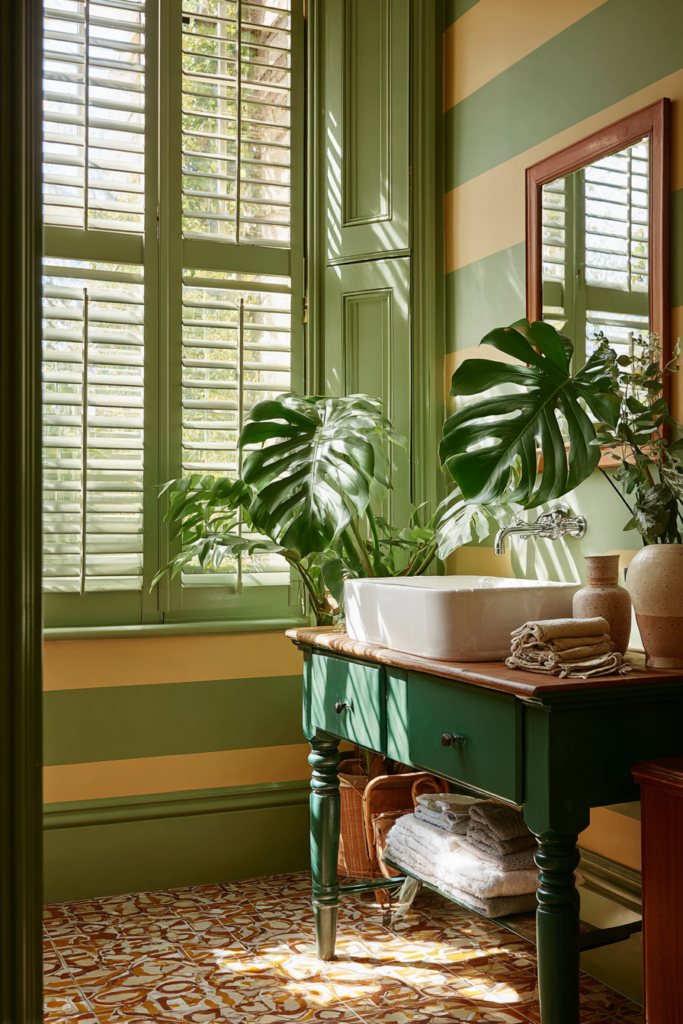
    An East London bathroom with painted green shutters and stripy walls with fun character and green house plants

    This is the first thing everyone asks. And fair enough, it is a valid concern.

    Here is the thing: cheap mdf or wooden shutters will absolutely warp in a bathroom. No question. But bathroom shutters are not wooden. They are made from ABS, which is a waterproof material designed specifically for moisture. We fit them all over East London – Hackney, Stoke Newington, Islington – and they do not warp. They just do not.

    ABS is waterproof on its own, and we cover it in waterproof paint as an extra layer of protection. That combination means they can take the hard knocks of daily bathroom life and stay in perfect shape. They are honestly more robust than wood or MDF would ever be in a humid room.

    And obviously, the bathroom needs to be properly ventilated. An extractor fan that actually works and a window you can open. If your bathroom is internal with no windows, then no, shutters are not going to solve that. But if you have got a real window and decent ventilation, our shutters are brilliant. Genuinely the best solution for a bathroom window.

    Privacy Without That Bunker Feel

    Standard blinds are annoying in bathrooms. Either they are fully down and the room is cave-like, or they are up and you have got someone looking at you in the shower.

    Shutters give you proper control. You can angle the louvres so light comes in but nobody can see in. You can tilt them to bounce light around the room without glare. You can open them fully when you want, close them when you need privacy. It is not all or nothing. You get to choose.

    And that flexibility is something blinds just cannot do.

    Why An East London Terrace Bathroom Suits Plantation Shutters

    Here is what we notice: when shutters are fitted properly, they change how a bathroom feels. The frame sits neatly in the reveal. The louvres catch light and create actual shadows and depth on the wall. It looks intentional. Like someone actually thought about this space rather than just grabbing whatever was on the shelf.

    If you have got a Victorian terrace with a decent window – maybe a tall sash or something with actual proportions – shutters are perfect. They respect the architecture instead of fighting against it. They look like they belong.

    About That Steam Thing

    People worry: if I close the shutters, am I going to trap the moisture and ruin them?

    No. And here is why: you do not need to close them fully. Tilt the louvres and the steam rises straight out. You have got privacy and the bathroom is breathing. It is the best of both worlds. You are not stuck choosing between one or the other.

    That is probably why we specify them in bathrooms so oftern. They are flexible. They let you have what you actually need.

    The Material Makes All the Difference

    For bathroom shutters, the material is everything. You need ABS, not wood. ABS is waterproof by design and specifically engineered for moisture and humidity. We cover it in waterproof paint for extra protection, and that is it. You have got shutters that will not warp, will not deteriorate, and will actually get tougher with use.

    We have worked with a lot of people in Leyton and around East London who chose shutters because they wanted something that would actually last. Not just for a few years. Years and years. Something that becomes part of your home rather than something you replace every five years. Our shutters do that.

    Why Do Our Shutters Work So well in Bathrooms?
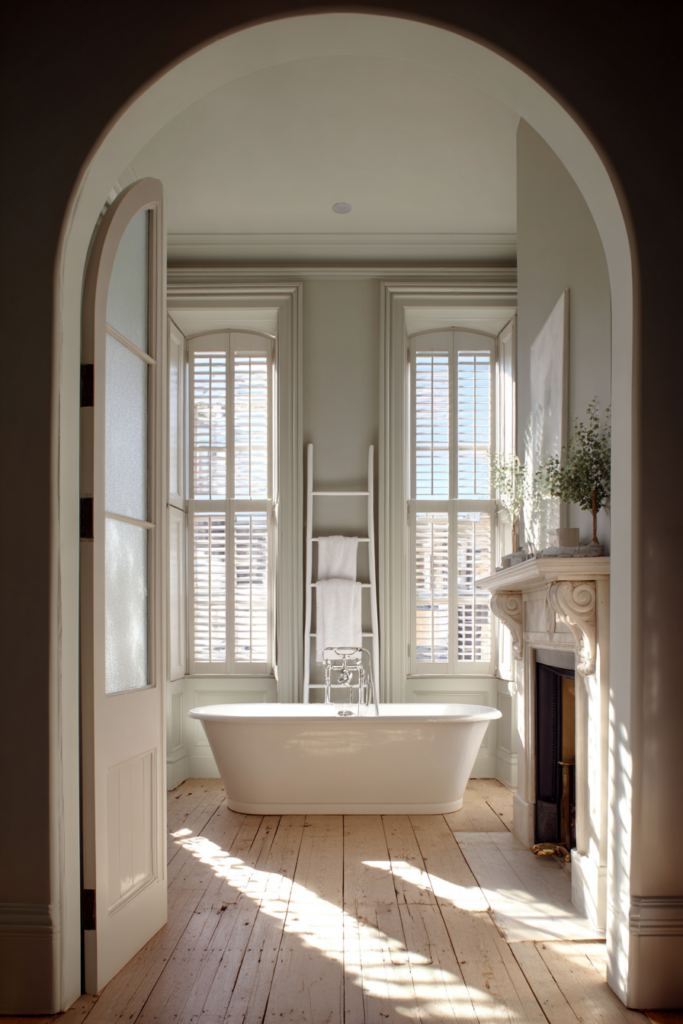
    A serene Georgian-style background through an arched doorway with full-height plantation shutters, with the sun streaming through onto a free-standing bath.

    Shutters in a bathroom are not complicated. You get proper light control. You get privacy when you need it. You get ventilation that actually works. And you get something that looks considered, like you thought about your space.

    We have fitted hundreds of shutters in bathrooms. If you are doing a proper renovation and you want to get the window right, it is worth a conversation. We can come and have a look at yours and tell you if shutters make sense. No pressure, just a chat about what might work for you.

  • Bay Window Shutter Ideas for Victorian & Edwardian Homes in East London

    Bay Window Shutter Ideas for Victorian & Edwardian Homes in East London

    The Top Benefits of Choosing Shutters for Bay Windows

    Bay windows are one of the most striking features of East London’s Victorian and Edwardian homes. They flood rooms with natural light, add architectural charm, and create extra floor space that makes period houses feel spacious. But they also present a challenge when it comes to window coverings. Curtains can look bulky and block daylight, while off-the-shelf blinds often fail to fit the unique angles of a bay.

    Victorian bay window with heavy velvet curtains in a traditional East London home, dimly lit living room with antique chairs and period décor.

    That’s why more and more homeowners are turning to bay window shutters in East London to transform their period homes. Stylish, practical, and made-to-measure, shutters enhance the beauty of your bay while solving the common problems of draughts, privacy, and light control.

    Why Bay Windows Deserve Special Attention

    East London is full of housing stock from the Victorian and Edwardian periods — elegant terraces in Clapton, double-fronted houses in Whitechapel, and Edwardian villas in Walthamstow. These homes typically feature tall sash bay windows, which are both a blessing and a challenge.

    • Plenty of light: Bay windows brighten up the home, but they can also leave you feeling exposed.
    • Privacy issues: Street-facing bays often look straight out onto pavements or roads.
    • Energy loss: Original sash windows are beautiful, but not always the most energy-efficient.
    • Awkward shapes: Angled bays are difficult to dress neatly with curtains or standard blinds.

    Shutters solve all these problems in one elegant solution.

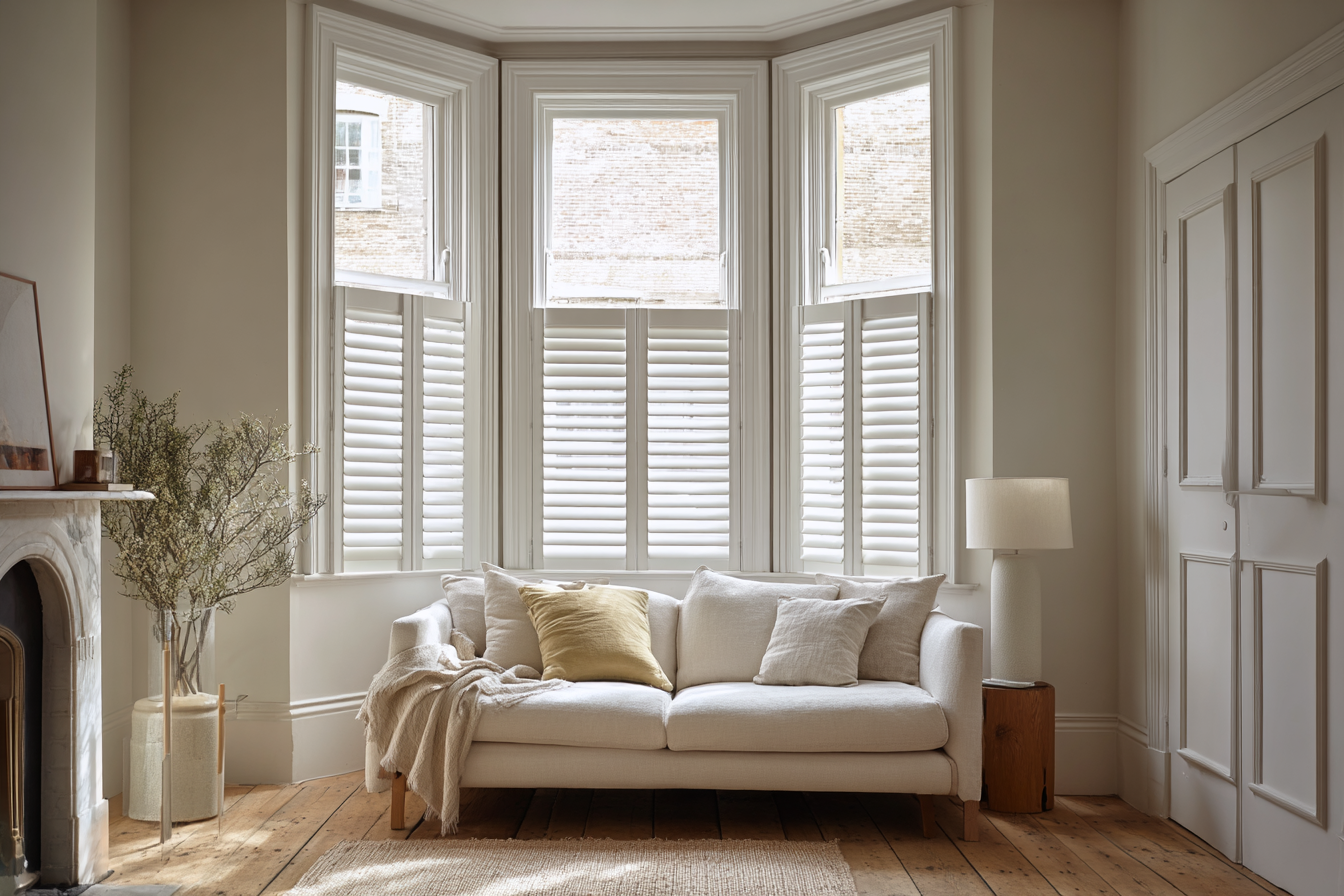
    Edwardian bay window with tier-on-tier white plantation shutters in an East London living room, bright and elegant space with neutral sofa and soft furnishings.

    The Benefits of Bay Window Shutters in East London

    Close-up of white plantation shutter louvres on a bay window in an East London home, showing light control and elegant detailing.

    1. Tailored to the Shape of Your Windows

    Every bay window is different, which makes mass-produced window dressings tricky. Shutters are designed to fit the exact angles and dimensions of your bay, creating a snug and seamless finish that enhances the architecture of your home.

    2. Privacy Without Blocking Light

    Unlike curtains, which often have to be fully closed for privacy, shutters give you control. By tilting the louvres, you can prevent passers-by from peering in while still enjoying natural daylight. This is especially useful in East London’s terraced streets, where homes are close to the pavement.

    3. Improved Insulation & Energy Efficiency

    Original Victorian and Edwardian sash windows are notorious for draughts. Shutters add an insulating layer that reduces heat loss and helps cut energy bills during autumn and winter. It’s a practical investment as well as a style choice.

    4. Timeless Style That Matches Period Homes

    Plantation shutters complement period architecture beautifully. They look as if they’ve always belonged in Victorian and Edwardian homes, unlike heavy curtains that can overwhelm the space. Their clean lines also appeal to modern tastes, bridging the gap between old and new.

    5. Low Maintenance & Long Lasting

    Fabric curtains and blinds can fade, fray, and trap dust. Shutters are easy to wipe down, making them a low-maintenance option that stays fresh year-round. With proper care, they’ll last for decades.

    Design Ideas for Victorian & Edwardian HomesWhich Shutters are right for you?

    Classic White Plantation Shutters

    Bright, versatile, and timeless. White shutters make tall sash bays look crisp and elegant while maximising light.

    Tier-on-Tier Shutters

    This popular option features independent top and bottom panels. Keep the bottom section closed for privacy, while leaving the top open to flood the room with daylight.

    Café-Style Shutters

    Perfect for street-facing homes, café-style shutters cover only the lower half of the window. They provide privacy from the pavement while leaving the upper section open to sunlight.

    Solid Panel Shutters

    A traditional option inspired by original Victorian joinery. Solid shutters block out light completely when closed, making them ideal for bedrooms.

    Shutters vs Curtains for Bay Windows

    East London living room with Victorian bay window café-style shutters, autumn décor with candles and textured cushions creating a warm and inviting atmosphere

    Curtains may be traditional, but shutters are the smarter choice for East London’s period homes.

    • Space saving: Curtains often block part of the bay, whereas shutters sit neatly within the frame.
    • Style: Curtains can look heavy in smaller rooms, while shutters highlight the elegance of the bay.
    • Maintenance: Curtains collect dust and odours; shutters are easy to keep clean.
    • Longevity: Shutters are a permanent upgrade that can add value to your property.

    Why East London Homeowners Are Making the Switch

    From Bethnal Green to Bow, more and more homeowners are choosing shutters over curtains. In busy city streets, they solve privacy concerns while letting natural light in. In draughty sash-window bays, they provide insulation and comfort. And in homes where style matters, they’re a timeless upgrade that fits period character while appealing to modern design.

    One recent installation in a Leytonstone terrace transformed a draughty Victorian bay into the focal point of the living room. Tier-on-tier shutters gave the family privacy during the day, insulation in winter, and a crisp modern look that worked with their interior style.

    Book Your Free Home Visit

    If you’re considering bay window shutters in East London for your Victorian or Edwardian home, now is the perfect time. An autumn installation means you’ll enjoy cosier evenings, lower energy bills, and a beautiful new look before Christmas.

    We offer free home visits across East London, Essex, and Hertfordshire. Our team will measure your windows, show you samples, and recommend the perfect shutter style for your home.